
High Performance Metals Division
In millions of euros |
|
|
|
Change |
||
|---|---|---|---|---|---|---|
|
|
04/01– |
|
04/01– |
|
|
|
|
|
|
|
|
|
Revenue |
|
825.2 |
|
678.5 |
|
–17.8 |
EBITDA |
|
28.6 |
|
53.8 |
|
88.1 |
EBITDA margin |
|
3.5% |
|
7.9% |
|
|
EBIT |
|
–10.6 |
|
14.9 |
|
|
EBIT margin |
|
–1.3% |
|
2.2% |
|
|
Employees (full-time equivalent), end of period |
|
13,212 |
|
11,587 |
|
–12.3 |
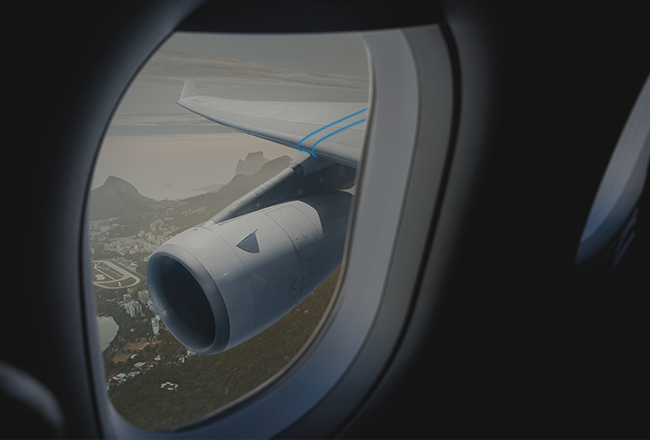
Global expertise in aircraft construction
Over 100 years of aviation experience and precise, state-of-the-art technology and production processes make us pioneers in safe, economical and environmentally conscious air travel.
BUSINESS DEVELOPMENT
In the first quarter of the 2025/26 reporting year, the High Performance Metals Division continued to show a mixed performance. In response to the persistently challenging market environment, the division’s management decided on a strategic realignment and initiated extensive reorganization measures in the previous financial year with the sale of the German Buderus Edelstahl plant. . For a more transparent presentation of the business development, the units HPM Production and Value Added Services are now described on the basis of the market development of the segments listed below:
- Tooling
- Industrials
- Aerospace and Power Industries
- Oil & Gas, CPI and Renewables
The Tooling market segment comprises deliveries of tool steel and is the division’s largest segment in terms of both volume and value. Competition and price pressure remained high in the first quarter of the 2025/26 financial year. The division’s management responded by focusing the product portfolio on the higher-quality segments and systematically expanding value-added services such as heat and surface treatments for tool parts.
From a regional perspective, demand figures in Europe remained very subdued in the first quarter of the 2025/26 financial year, with high imports of tool steels from China placing additional pressure on the market. In China itself, the High Performance Metals Division saw stable demand at a good level, although increasing price pressure has begun to take hold. In North America, customers were generally hesitant to place orders due to the unpredictable development of the customs issue triggered by the new US administration. In Brazil, the division’s most important market in South America, demand came under pressure from both the economic slowdown and a significant increase in imports, particularly from China.
The Industrials market segment comprises deliveries of special steels as well as processed parts and components to various industries worldwide. In contrast to the Tooling sector, these products are integrated directly into customers’ end products.
Valve steels and engine components in the automotive sector remained challenging in the first quarter of the 2025/26 financial year. By contrast, momentum in the food & beverage sector was largely satisfactory. The medtech (medical technology) sector also performed well, as did mining.
In the Aerospace and Power Industries market segment, the High Performance Metals Division supplies both special materials and forged parts and components, achieving very good market penetration worldwide. The positive market trend continued in the current reporting period. While Airbus remained the main growth driver at the start of the 2025/26 financial year, Boeing gradually caught up and significantly increased its deliveries of new aircraft.
The Oil & Gas, CPI & Renewables market segment (oil and gas, chemical process industry, and renewable energies) comprises deliveries of special materials and machined parts to global manufacturers of oil and gas exploration equipment, the petrochemical industry, and the renewable energy sector. On the market side, the current reporting period was characterized by economic uncertainty, customs duties, and trade restrictions. In some cases, this led to a significant reduction in exploration activities worldwide. However, demand from the petrochemical industry remained at a good level. The renewable energy sector, previously a minor part of this segment, continued to grow during the reporting period.
DEVELOPMENT OF THE KEY FIGURES
While the High Performance Metals Division faced declining trends on the revenue side, it achieved gains in earnings. The main reason for the drop in revenue was the loss of business volume after the sale of the German plant Buderus Edelstahl in Q4 2024/25. In addition, the oil and gas customer segment reported lower sales volumes. On the other hand, delivery volumes increased in the aerospace sector.
EBITDA in the previous year was negatively affected by one-off costs of EUR 28 million related to the sale of Buderus Edelstahl. The implementation of key cost-reduction and efficiency-enhancement measures helped stabilize operational performance in a challenging economic environment. Against this backdrop, EBITDA in the High Performance Metals Division rose by 88.1%, from EUR 28.6 million (margin 3.5%) in Q1 2024/25 to EUR 53.8 million (margin 7.9%) in Q1 2025/26. EBIT also turned positive over the same period, reaching EUR 14.9 million (margin 2.2%), compared with EUR –10.6 million in the previous year.
The number of employees (FTE – full-time equivalents) in the High Performance Metals Division declined by 12.3% to 11,587 as of June 30, 2025, compared with 13,212 a year earlier. This reduction was primarily due to the sale of Buderus Edelstahl and reorganization measures in both production and sales.